
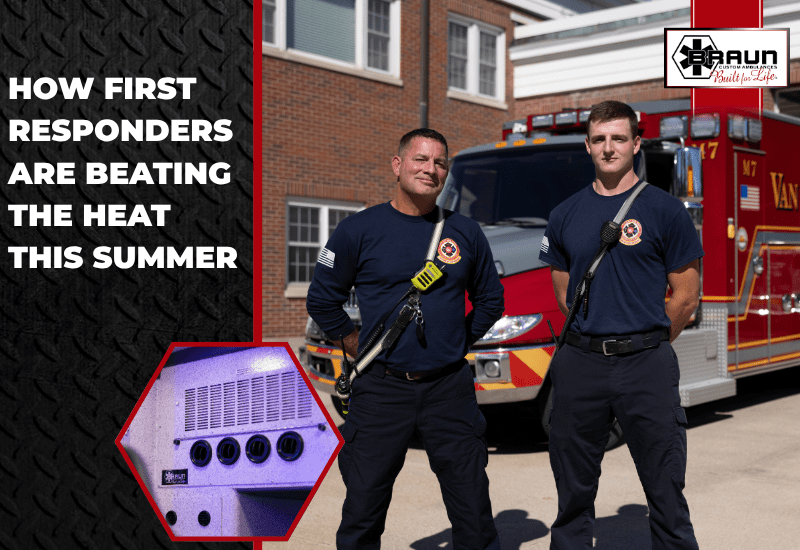
When the summer heat strikes, staying cool isn’t just about comfort for first responders, it’s about survival, performance, and delivering critical care. For fire departments like Van Wert Fire in Ohio, where temperatures soar and the calls don’t stop, managing heat exposure is part of the daily routine. Fire Chief Jon Jones, a veteran of over 40 years in the fire service, knows firsthand how punishing hot weather can be. From early morning training sessions to makeshift cooling stations with icy lawn chairs, every tactic is deployed to help his crew keep cool and ready to answer the call.
Summer Heat Brings a Surge in Emergency Calls
As temperatures rise, so do the number of emergency calls. According to the National Institutes of Health, ambulance dispatches increase by an average of 6% to 18% during heatwaves, depending on the severity of the heat. Chief Jones says the Van Wert Fire Department regularly sees an increase in heat-related calls, especially among older adults.
“Many won’t run their air conditioning during the summer for one reason or another. We always set the temperature in the rig for the patient’s comfort. That temperature might not be ideal for us, but our patients’ well-being comes first,” he shares. “Sometimes, just getting them in the ambulance and cooled down can significantly impact outcomes.”
For those without adequate access to climate control, the cooling environment inside their ambulance can be a critical turning point in their care.
Heat Takes a Toll on Firefighters
Chief Jones describes summer as “the worst” season for his crew, especially when firefighters are already suited up in heavy PPE gear and operating in intense environments.
“People think winter is tough, but it’s summer that really takes a toll,” he explains. “You lose hydration fast, your blood thickens, and it can take hours for your body to regulate again.”
His team follows the one-bottle rule during fire scenes—meaning firefighters are rotated out for rehabilitation after using a single air tank to ensure safety and prevent heat-related illness. Studies show that firefighters are at an increased risk of heart attacks while responding to a scene. Rehabbing while on-scene allows time for the body temperature to cool, includes time to hydrate appropriately, and monitoring vitals; all of which prevent life-threatening complications.
Despite these proactive measures, the realities of a small, rural department often mean skipping rehab and returning to action immediately. In these moments, the ambulance becomes the primary—sometimes only—source of relief, making a high-performance HVAC system essential for providing a safe, climate-controlled space for recovery.
The Ambulance as a Mobile Cooling Station
The HVAC system inside any Braun ambulance plays a central role in this process. With air conditioning flowing within the patient module and in the cab, the system prevents both patients and crews from exposure to the dangers of extreme heat.
Chief Jones recalls a time early in his career, before Braun’s dual HVAC systems, when the cab’s air conditioning was expected to cool the entire vehicle.
“For a long time, this was the norm in the industry. No matter the ambulance manufacturer, the air conditioning never kept up when it was coming from the cab exclusively. It always felt hot in the back,” he says. “Now, we’re able to maintain a comfortable temperature in the front for our crew and in the back for patients.”
The upgraded Braun HVAC systems—now offered as a premium configuration—make a tangible difference in both patient care and crew comfort. These systems, designed with climate control zones and optimized airflow, reflect Braun’s commitment to crew safety and operational excellence.
Maintenance Makes the Difference
Maintaining cooling systems and ensuring their performance is in peak condition is critical during summer months. Regular maintenance ensures your department’s ambulances are always ready. Routine checks include inspecting filters, verifying refrigerant levels, and double-checking that fans and blowers are running properly. Departments should also run their HVAC systems regularly, even when not in use, to keep components functioning optimally and identify any issues before they become urgent.
Reliable Response in Every Season
The value of a reliable ambulance during the warmer months can’t be overstated. The ambulance and its cooling ability is a mobile extension of the emergency response effort, offering both shelter from the elements and a stable environment for patient stabilization. For departments like Van Wert, it’s also a lifeline they trust.
As warmer temperatures prevail, Chief Jones encourages the public to heed heat advisories, stay hydrated, and avoid peak sun hours. For first responders, however, the calls keep coming—heat or not. And thanks to Braun’s reliable craftsmanship and advanced HVAC systems, the Van Wert Fire Department is better equipped than ever to answer the calls.
Learn more about Braun’s advanced HVAC options, including the new High Performance Package, here.


